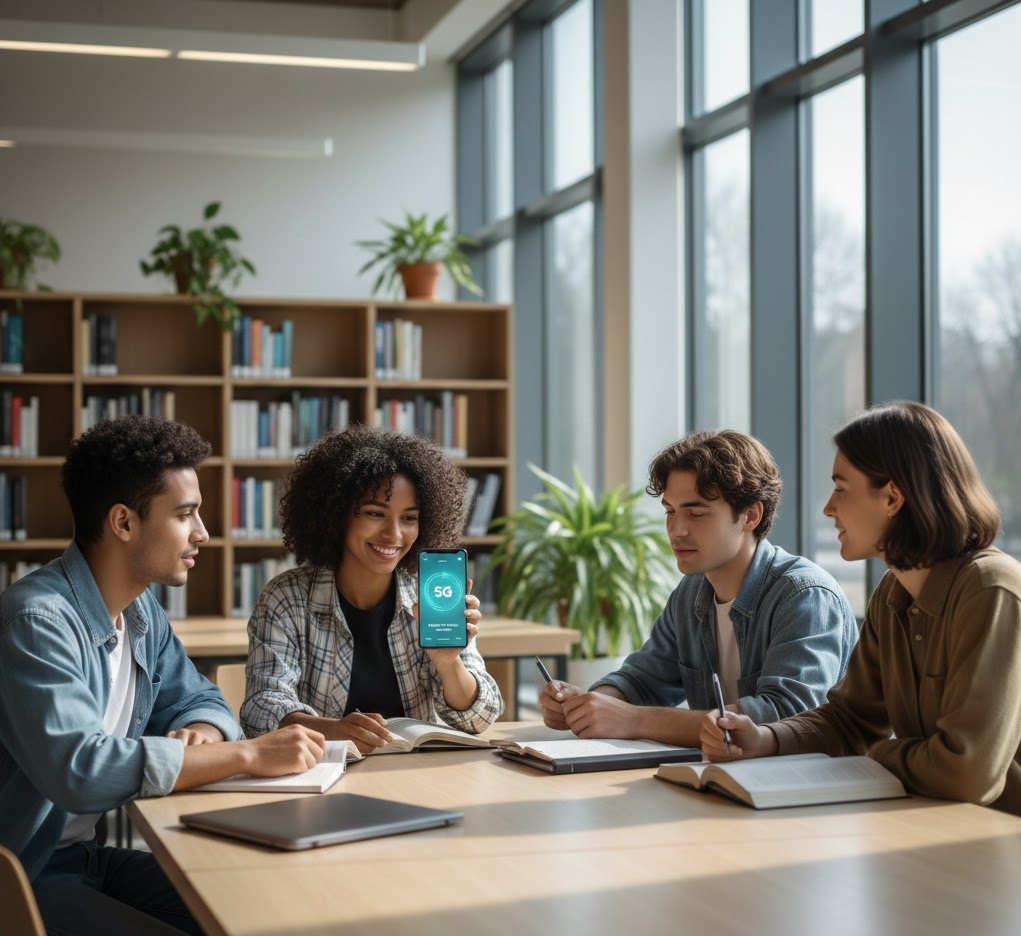
The Global Academic Connectivity Initiative: Provisioning Free eSIM Access for Scholars
Scholarly Analysis by the Neonet Editorial Board | Technical Series 2026
Provisioning a free eSIM has become a fundamental requirement for scholars navigating the contemporary pedagogical landscape. Whether a doctoral candidate conducts longitudinal field research or a faculty member facilitates an international colloquium, the requirement for high-fidelity data remains non-negotiable. However, exorbitant roaming tariffs and the physical limitations of legacy SIM hardware frequently impede this intellectual mobility. Consequently, the global research community has transitioned toward a more sophisticated, digital-first solution: the embedded Subscriber Identity Module (eSIM).
Pioneering institutional frameworks now provide a free eSIM to qualified members of the academic sphere. Specifically, the esim.edu.pl initiative facilitates grant-funded data allocations for verified students and educators worldwide. This comprehensive treatise examines the technical architecture of this technology, explores its academic applications, and delineates the protocol for securing an allocation today.
Technological Architecture: How Embedded Modules Facilitate Connectivity
An eSIM represents a transformative shift in telecommunications. It functions as an integrated circuit soldered directly onto the device’s motherboard. Unlike its physical predecessors, this hardware allows for the remote provisioning of network profiles via software. Such flexibility significantly empowers researchers who navigate diverse geopolitical jurisdictions. Furthermore, this architecture enables the simultaneous operation of multiple network identities. This ensures that scholars maintain constant contact with their home institutions while utilizing localized data streams.
Scholarly professionals frequently operate in geographically isolated environments where traditional procurement of hardware is unfeasible. In these contexts, a free eSIM serves as an immediate, cloud-delivered lifeline. Because the activation process occurs entirely within a digital ecosystem, scholars can initialize network access within seconds. Therefore, this technology systematically removes the logistical obstacles that historically compromised international academic travel.
Empirical Use Cases: Academic Value of Data Grants
Why should the academic community prioritize the adoption of a free esim trial? Beyond rudimentary web navigation, specialized academic endeavors necessitate stable, high-bandwidth throughput. We have categorized the primary use cases where this technology enhances research outcomes below:
- International Scholarly Colloquia: Delegates attending global symposia can disseminate high-resolution datasets via their digital profile. This allows them to participate in real-time collaborative platforms without latency issues.
- Longitudinal Field Data Collection: Researchers in the natural sciences can synchronize empirical observations with institutional cloud repositories instantaneously. This significantly mitigates the risk of data loss.
- Transnational Academic Mobility: Students participating in exchange programs, such as the Erasmus+ initiative, can secure a free eSIM upon arrival. This facilitates safer navigation and immediate integration.
- Multi-Factor Authentication (MFA) Integrity: Faculty members require redundant data channels to maintain the integrity of secure university portal access. This is critical during international transit via MFA protocols.
Hardware Interoperability Matrix
Prior to requesting an academic data grant, users must verify that their hardware supports the requisite digital provisioning standards. Specifically, most flagship mobile devices released post-2020 possess the necessary integrated circuitry. Please refer to the technical matrix below for confirmed compatibility:
| Manufacturer | Supported Hardware Iterations |
|---|---|
| Apple Inc. | iPhone 11 through 16 Series; iPad Pro/Air (Cellular variants) utilizing M1/M2/M3 architecture. |
| Pixel 4 Series through Pixel 9 Pro (inclusive of Tensor-based models). | |
| Samsung Electronics | Galaxy S20 through S24 Ultra; Galaxy Z Fold and Z Flip product lines. |
| Computing Platforms | Microsoft Surface Pro (5G-enabled); HP EliteBook series; select Lenovo ThinkPad configurations. |
Institutional Logistics: Guidelines for Profile Acquisition
The esim.edu.pl initiative has optimized the verification protocol to facilitate rapid deployment. If you adhere to the following procedural steps, the infrastructure will execute your allocation with precision:
- Credential Authentication: Initially, input your institutional electronic mail address into the portal’s secure interface. The system supports suffixes such as .edu or .ac.nz.
- Geospatial Selection: Subsequently, designate your target deployment region for your grant. The initiative currently supports the European Union, the United States, Australasia, and prominent Asian hubs.
- Verification of Academic Status: Following your submission, the server transmits a unique six-digit verification token to your inbox. You must provide this token to validate your institutional affiliation.
- Activation via QR Protocol: Finally, the system automatically dispatches an encrypted QR code to your designated email. You scan this matrix with your device’s network settings to activate the free esim trial.
Scholarly Comparative Analysis: Grants vs. Consumer Solutions
Scholars frequently inquire why institutional grants are superior to consumer-facing providers. While retail solutions offer accessibility, they typically necessitate significant financial outlays. They also require comprehensive credit background disclosures. In contrast, esim.edu.pl represents a dedicated resource for the global academic sector. Consequently, students can reallocate vital financial resources toward scholarly materials and tuition. Furthermore, institutional profiles prioritize data bands optimized for academic research districts. This ensures superior throughput during critical research windows.
Scholarly Disclaimer & Support Limitation:The academic eSIM portal functions as an autonomous, grant-funded infrastructure. Consequently, the initiative does not provide technical support regarding hardware activation or peripheral injuries. The provisioning cycle is strictly self-service: the user requests, verifies, and the system executes. Engagement with this resource constitutes an agreement that the provisioning body assumes no liability for hardware-specific configuration errors.
Digital Equity and the Scholarly Experience
The trajectory of academic mobility is undeniably digital. By systematically dismantling the barriers to high-fidelity data, we foster a better research environment. This allows the next generation of scholars to traverse the globe without intellectual or logistical constraints. We strongly advocate that all eligible educators and students leverage the free esim trial to enrich their academic endeavors. Digital connectivity should not represent a burden. Rather, it should constitute a standardized component of the modern scholarly experience.